
Air conditioning for homes in Dartford, Kent and London
Wall-mounted systems for bedrooms, living rooms, home offices and garden rooms. Most of them heat as well as cool, so you can use them all year.
Rooms that benefit most
Bedrooms. British houses are built to hold heat, which is good in winter and miserable on a summer night. A bedroom that is still 26 degrees at midnight makes for a bad night's sleep.
Home offices. A small room with a computer, a monitor and a person in it gets warm quickly, even without much sun.
Loft conversions. Rooms under the roof take the full heat of the sun in summer and can be hard to heat in winter. One system deals with both.
Garden rooms and conservatories. Lots of glass and little insulation make them too hot in summer and too cold in winter. Air conditioning makes them usable all year.
Cooling in summer, heating in winter
Most modern split systems can run in reverse. In heating mode they take heat from the outside air and move it indoors, the same way an air source heat pump does. Because they move heat rather than make it, they deliver several units of heat for every unit of electricity, so they cost far less to run than plug-in electric heaters.
If you want the system for heating as well, tell us at the survey. We will make sure it is sized to heat the room on a cold day, not just cool it on a hot one.
What a home installation involves
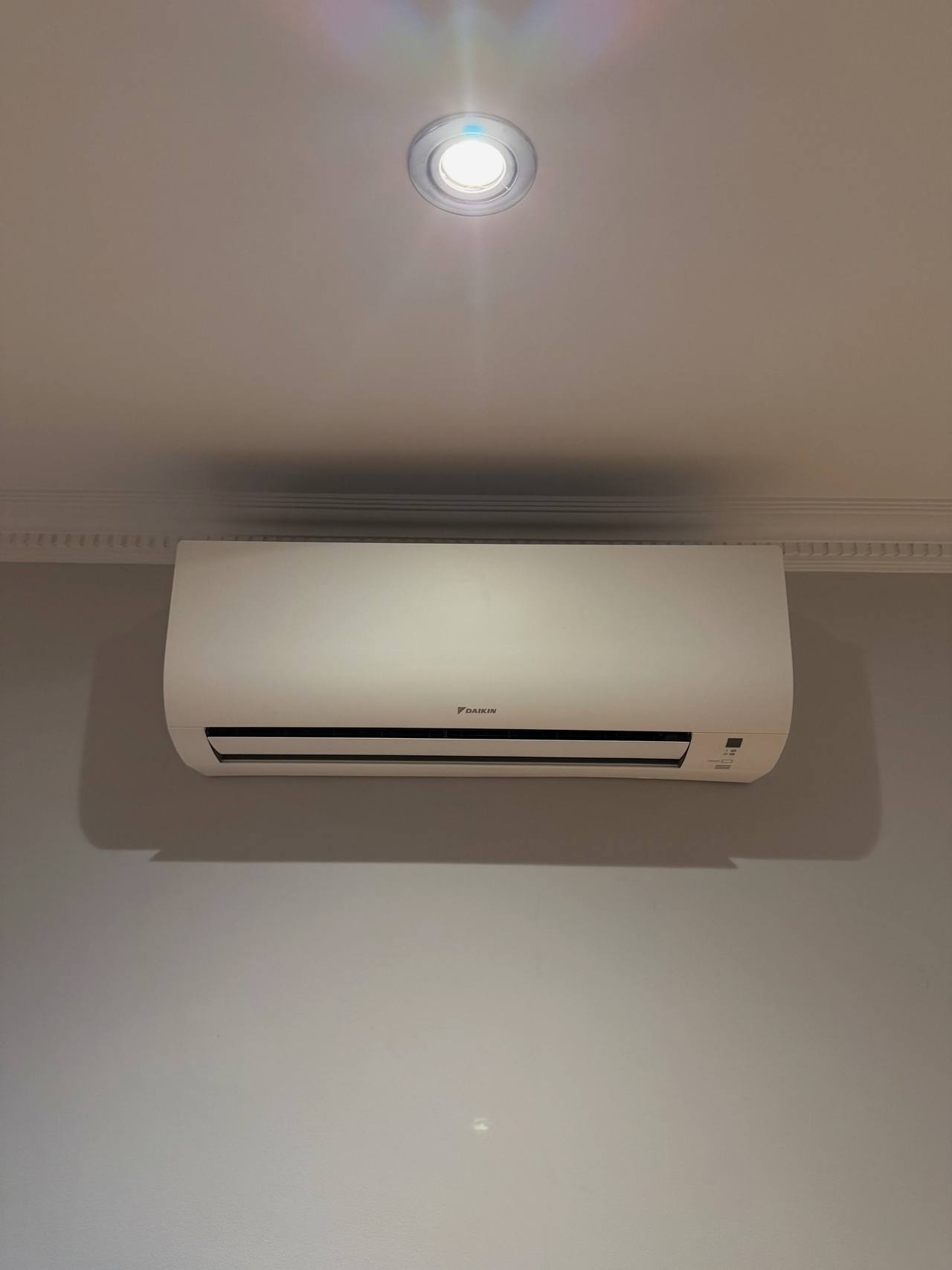
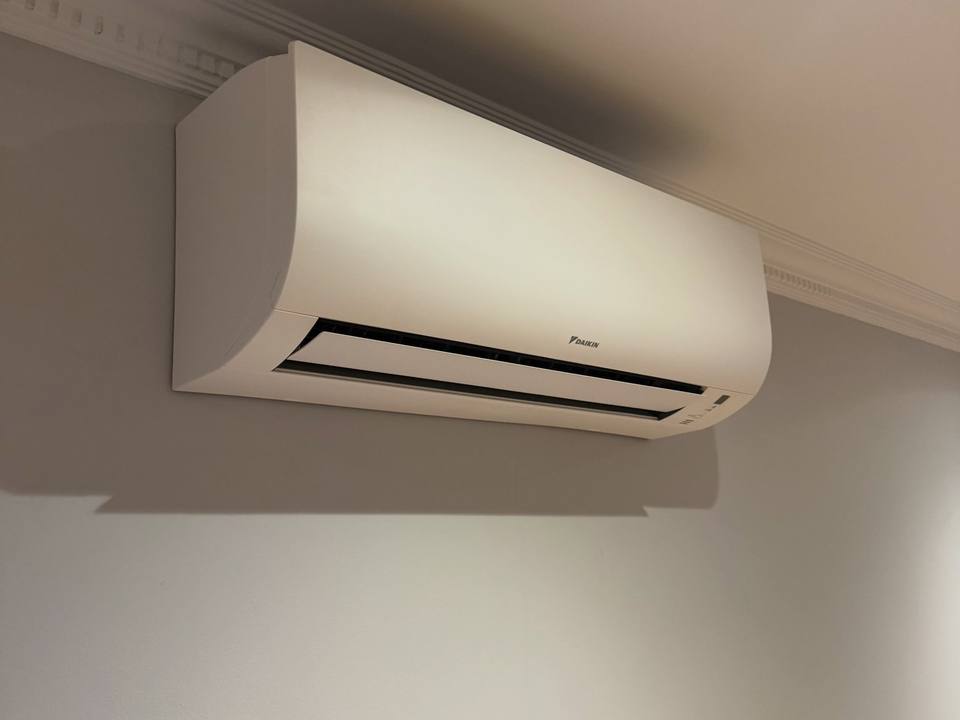
A single wall-mounted system in one room is usually fitted in a day. The indoor unit goes high on the wall, and the outdoor unit goes on an outside wall or the ground nearby. They are joined by insulated pipes that pass through one neat hole in the wall, behind the indoor unit where possible.
Where pipework has to run along an outside wall, we put it in trunking so it is tidy and protected. The outdoor unit sits on anti-vibration mounts so the sound does not travel into the house, and has its own isolator switch.
We pressure test and evacuate the pipework before releasing the refrigerant, commission the system, and show you how to use the remote and any app before we leave.
Choosing a system
We fit Daikin, Mitsubishi Electric, Mitsubishi Heavy Industries and Fujitsu systems, and other brands. For most homes, a wall-mounted split system is the right answer. The differences between models are mostly in how quiet they are, how well they heat in cold weather, whether you can control them from your phone, and how they look on the wall.
We will recommend something that suits the room and your budget, and explain why. If you have more than one room in mind, we will talk you through the options for each.
Before you go ahead
Most homes do not need planning permission for air conditioning, but some do: listed buildings, homes in conservation areas, and anywhere the outdoor unit would face the road. If you live in a flat or leasehold house, you will usually need the freeholder's agreement too. We can tell you exactly where the units will go, which is what the council or freeholder will want to know.
Looking after it
A home system needs very little. Rinse the filters every few weeks when it is in heavy use, keep the outdoor unit clear, and have it serviced once a year. We can set up a maintenance contract so the service is booked without you having to remember.
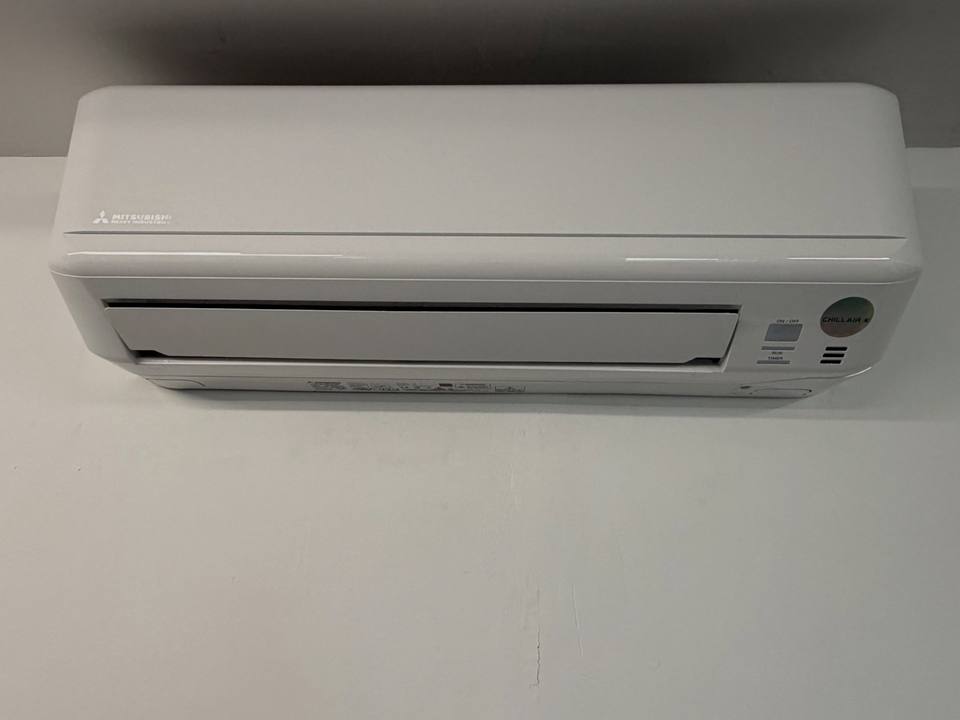
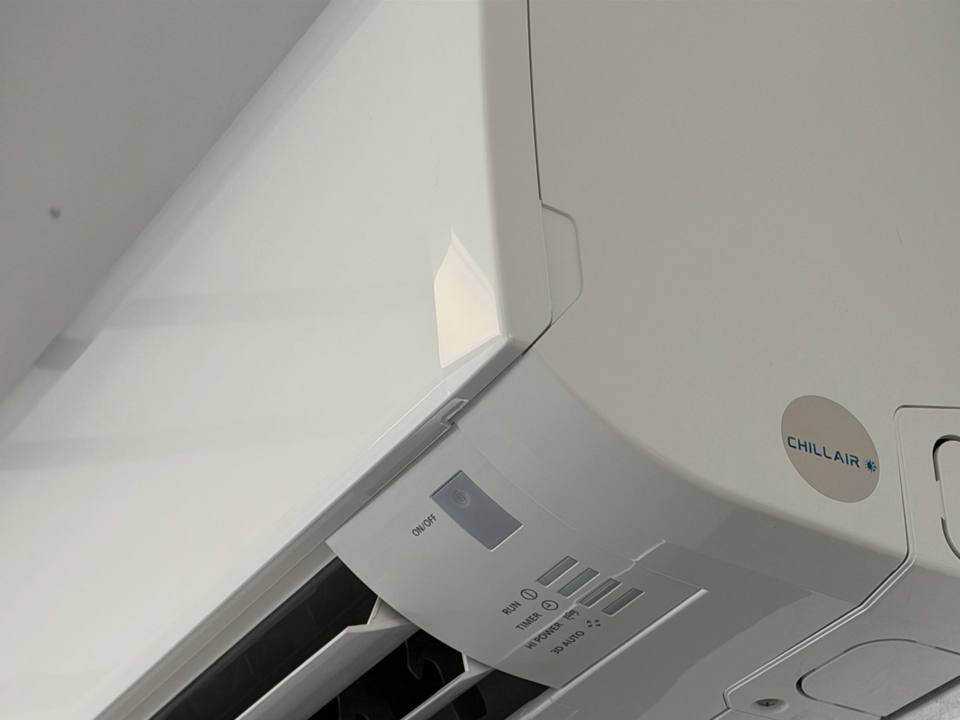
Homes we have fitted
See more of our work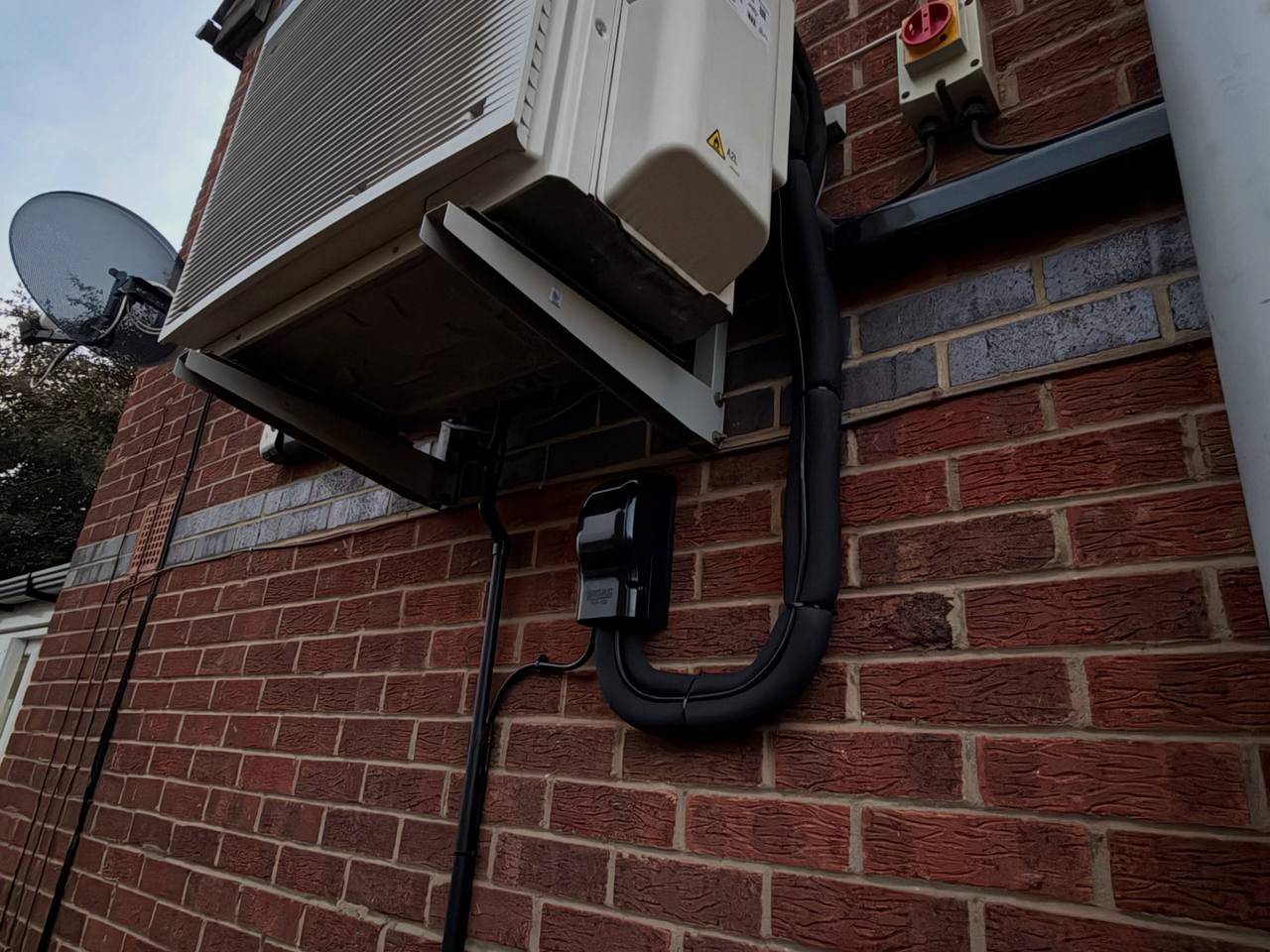
Questions about domestic air conditioning
Is air conditioning noisy?
Modern systems are quiet. Wall-mounted indoor units on a low fan speed are often around 20 to 25 decibels, which is quieter than a normal conversation and quiet enough for a bedroom. They get louder on the highest fan speed while cooling a hot room down, then settle back once it reaches temperature. Each model has its sound level on the specification sheet, and we can talk you through it.
The outdoor unit makes more noise than the indoor unit, so where it goes matters. We look at neighbouring windows and gardens during the survey, and fit units on anti-vibration mounts so the sound does not travel through the wall or floor.
Can air conditioning heat as well as cool?
Yes. Most modern split systems can run in reverse, taking heat from the outside air and moving it indoors. This is the same principle as an air source heat pump.
Because the system moves heat rather than making it, it can deliver several units of heat for every unit of electricity it uses. That makes it much cheaper to run than plug-in electric heaters, and it is a good option for rooms that are hard to heat, such as conservatories, garden rooms and loft conversions.
Modern units keep heating well in cold weather, although their output drops as the outside temperature falls. Each model has a rated operating range on its specification sheet, and we will make sure the system we recommend is sized for heating as well as cooling if that is what you need.
Do I need planning permission for air conditioning?
Often not, but it depends on the property and where the outdoor unit goes. Unlike air source heat pumps, air conditioning units do not have their own permitted development rights in England, so councils look at them case by case.
You are more likely to need permission if the building is listed, if it is in a conservation area, if the outdoor unit would be on a wall facing the road, or if the property is a flat or commercial building. Leaseholders usually also need the freeholder or landlord to agree before any work is done.
The safest thing is to check with your local council planning team before you go ahead. We can tell you where the outdoor unit would go and what it looks like, which is what the council will want to know.
Get a free quote
Tell us about the property and what you need. We will call you back, arrange a survey and send you a quote.
- Phone
- 07588 656887
- Hours
- Monday to Friday, 8am to 5pm. Out-of-hours callouts available.