
Commercial air conditioning in Dartford, Kent and London
Air conditioning for offices, shops, salons, studios and server rooms. We fit it, maintain it, and keep your F-Gas records in order.
Businesses we work with
Shops. Customers leave a hot shop, and stock can suffer too. We have fitted ceiling cassettes in a milkshake shop at Bluewater Shopping Centre, with the outdoor unit on the roof.
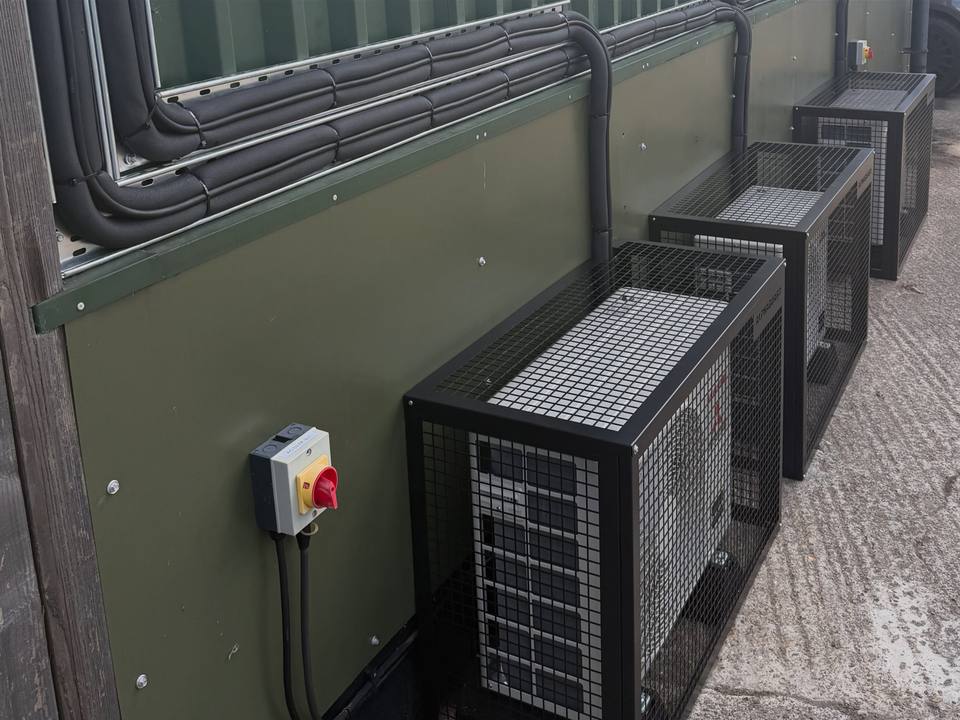
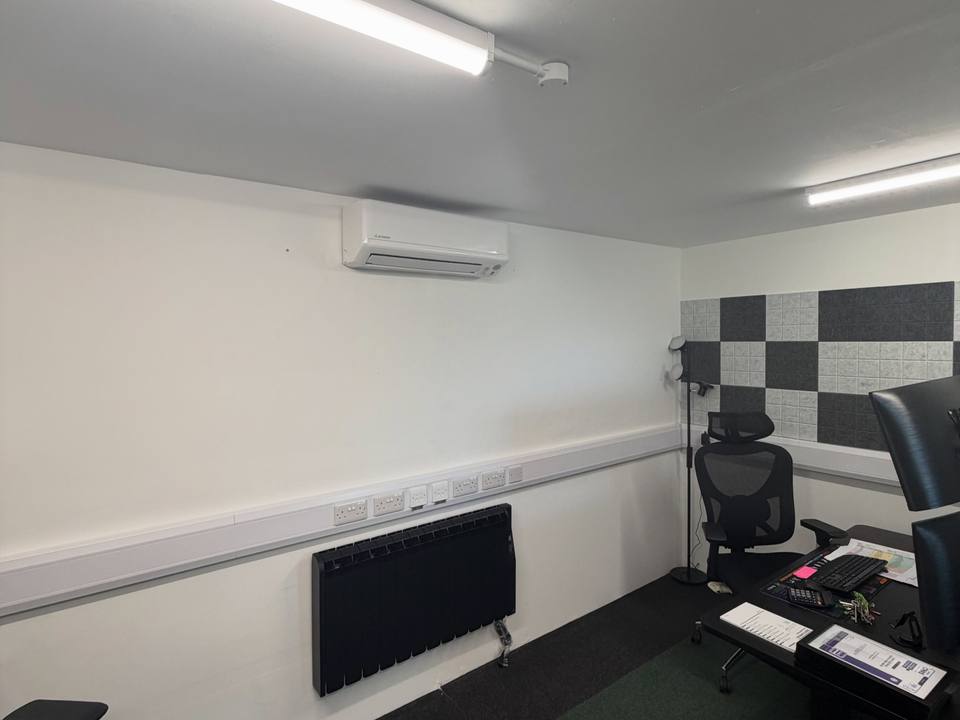
Offices. Computers, lighting and people all add heat, and a stuffy office is hard to work in. We have fitted wall-mounted systems across several offices on one site, with the outdoor units in protective cages along the building.
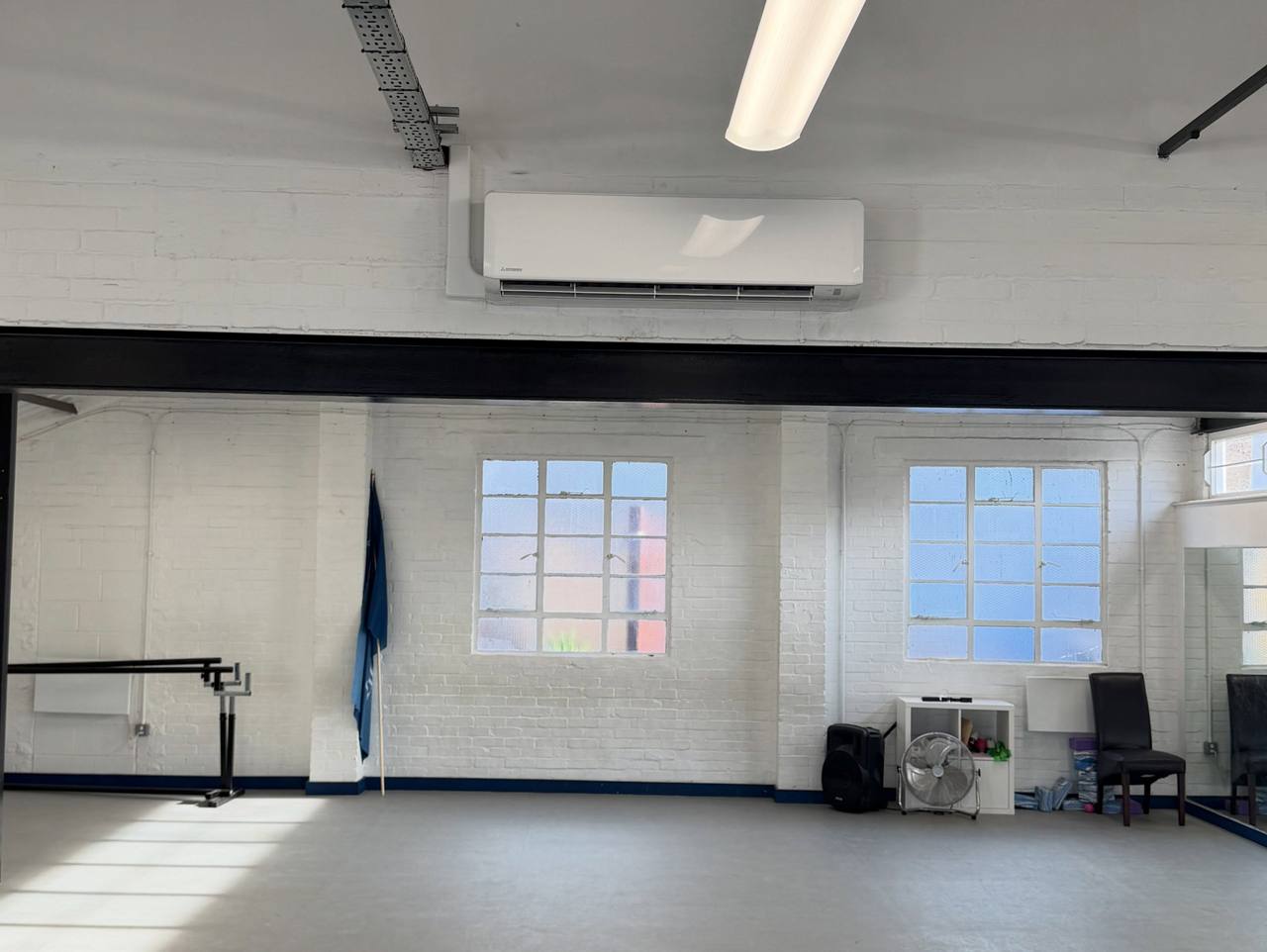
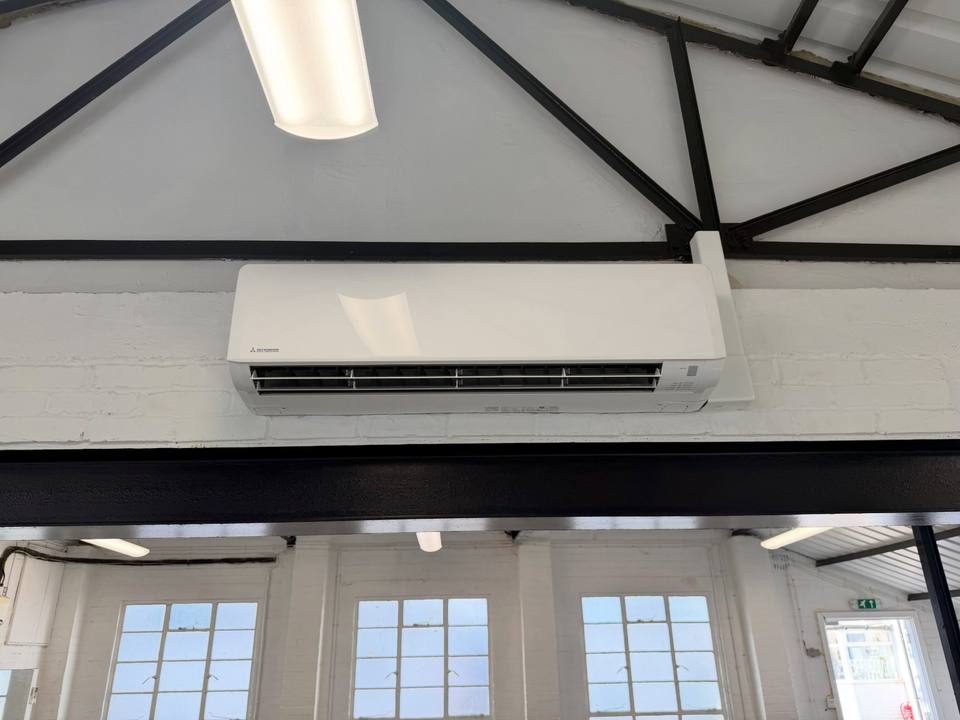
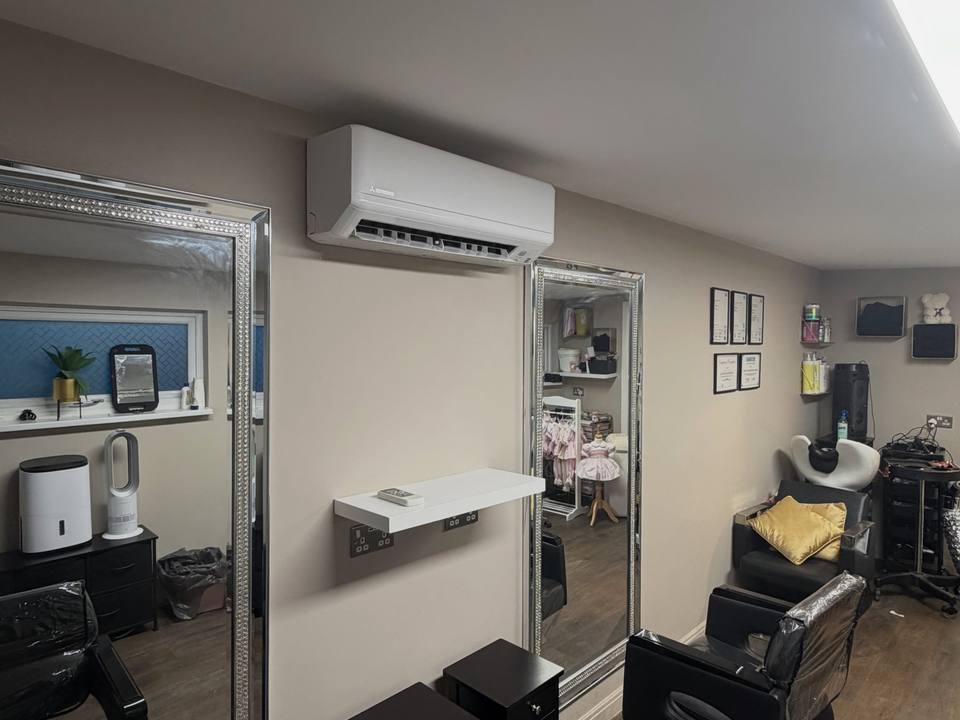
Salons and studios. Hairdryers, styling tools and exercise all push the temperature up. We have fitted systems in a hair and beauty salon and in a dance studio with a high steel-framed roof.
Server rooms. Equipment that produces heat around the clock needs cooling that does the same. A server room usually needs its own system, sized for the equipment rather than the room.
Systems for commercial buildings
Ceiling cassettes fit into a suspended ceiling and spread air in four directions. They are the usual choice for shops and open-plan offices, where wall space matters.
Wall-mounted units suit individual offices, salons, studios and rooms without a suspended ceiling. In high rooms, such as the dance studio we fitted, they go high on the wall where they are out of the way.
Dedicated server room cooling runs all year, day and night, separately from the system that keeps the people comfortable.
We fit Daikin, Mitsubishi Electric, Mitsubishi Heavy Industries and Fujitsu systems, and other brands. We will recommend equipment based on the building, how it is used and the running costs, not just the price of the units.
Planning the work
Every commercial job starts with a survey. We look at the space, how many people use it, the equipment in it and the hours it is open, and work out the cooling it needs. We check where the outdoor units can go, whether that is a wall, a yard or a flat roof, and how the pipework will reach them.
Shopping centres and managed buildings usually need risk assessments, method statements and landlord approval before any work starts. Tell us at the survey who manages the building, so this does not hold up the job.
We are PQS Health & Safety Approved and an SSIP Registered Member, assessed against the SSIP core criteria. Many main contractors and facilities managers accept SSIP membership as health and safety pre-qualification, which saves repeating the same checks before work can start.
We can provide risk assessments and method statements, and plan the work around your opening hours.
F-Gas obligations
If your business operates air conditioning, you may have legal duties under the F-Gas regulations. Systems holding refrigerant equal to 5 tonnes of CO2 equivalent or more must be leak checked by a certified engineer at set intervals, and you must keep records of the checks and any work done.
We hold REFCOM F-Gas company certificate REF1023302, valid until 29 August 2028. We can work out which of your systems are covered, carry out the leak checks, and give you the records. Read more about maintenance contracts and F-Gas leak checks.
After installation
A commercial system works harder than a domestic one and needs servicing more often, usually every six months. A maintenance contract keeps it efficient, keeps the warranty in order, covers the F-Gas leak checks, and makes a breakdown in the middle of summer much less likely. If something does go wrong, we offer out-of-hours callouts.
Commercial jobs we have done
See more of our work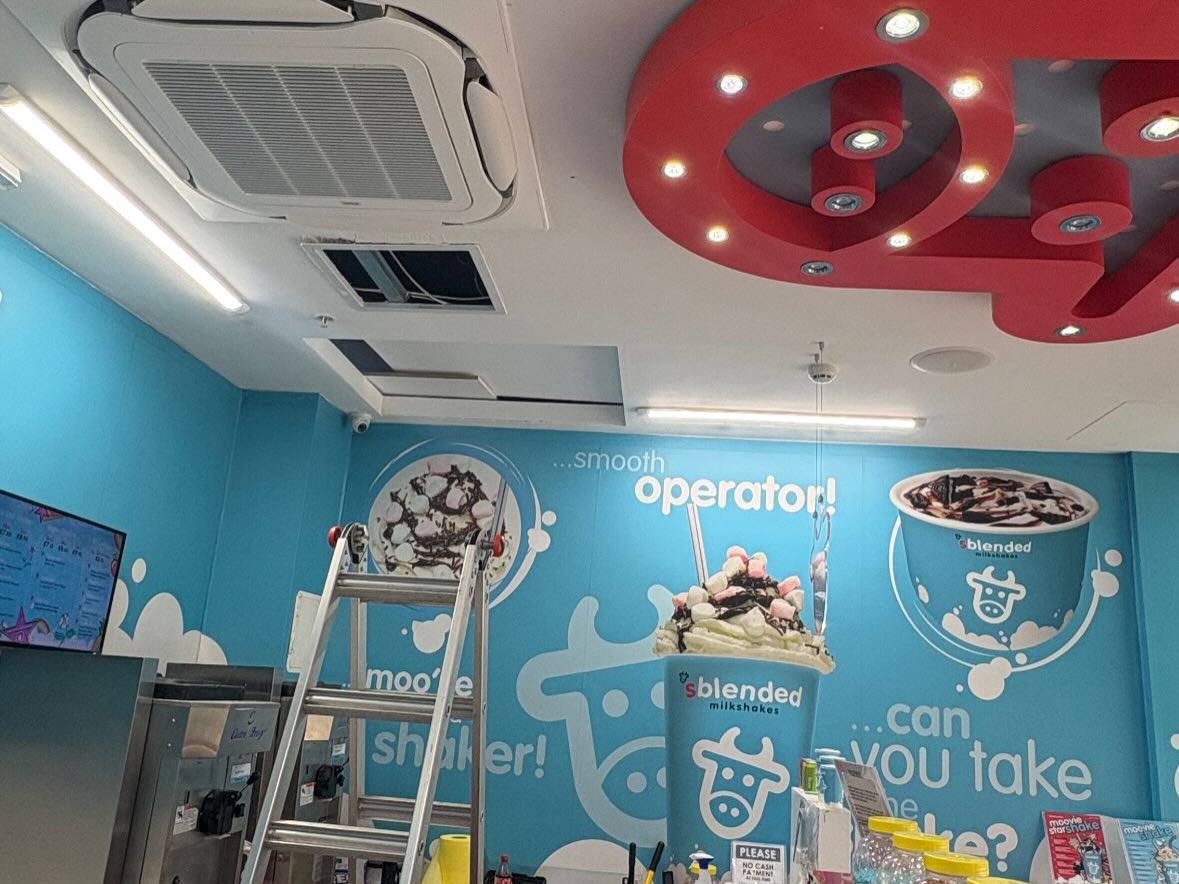
Questions about commercial air conditioning
Do commercial systems need F-Gas leak checks?
Many do. Under the F-Gas regulations, the operator of a system holding refrigerant equal to 5 tonnes of CO2 equivalent or more must have it leak checked by a certified engineer at set intervals. Larger systems need checking more often, and the biggest need automatic leak detection.
Whether your system is covered depends on the type and amount of refrigerant in it, which is on the label on the outdoor unit. The operator is also required to keep records of the checks and any work done.
We hold a REFCOM F-Gas company certificate. We can tell you whether your systems need leak checks and how often, and include them in a maintenance contract.
Do server rooms need a separate system?
Usually, yes. A server room produces heat all day, every day, all year round, including in winter when the rest of the building wants heating. Running it from the same system as the offices rarely works well.
A dedicated system is sized for the heat the equipment gives off rather than the size of the room, and set up to run continuously. Where downtime would be costly, a second unit as backup is worth considering.
We look at the equipment, the room and how critical it is during the survey, and recommend a system to suit.
How long does an installation take?
A single wall-mounted system in one room is usually fitted and commissioned in a day. A multi-split system with several indoor units, or a job with long or awkward pipe runs, can take two or three days.
Commercial installations vary much more. They depend on the number of units, the ceiling type, access, and whether we need to work outside your opening hours.
We will give you a realistic timescale with your quote, so you know how long we will be on site and when the system will be ready to use.
Get a free quote
Tell us about the property and what you need. We will call you back, arrange a survey and send you a quote.
- Phone
- 07588 656887
- Hours
- Monday to Friday, 8am to 5pm. Out-of-hours callouts available.